
Call Us 📞 800-323-3130
Mon–Fri 8am–6pm CST, Sat–Sun 9am–1pm CST
Free design consultations
Showrooms in Miami & Fort Lauderdale
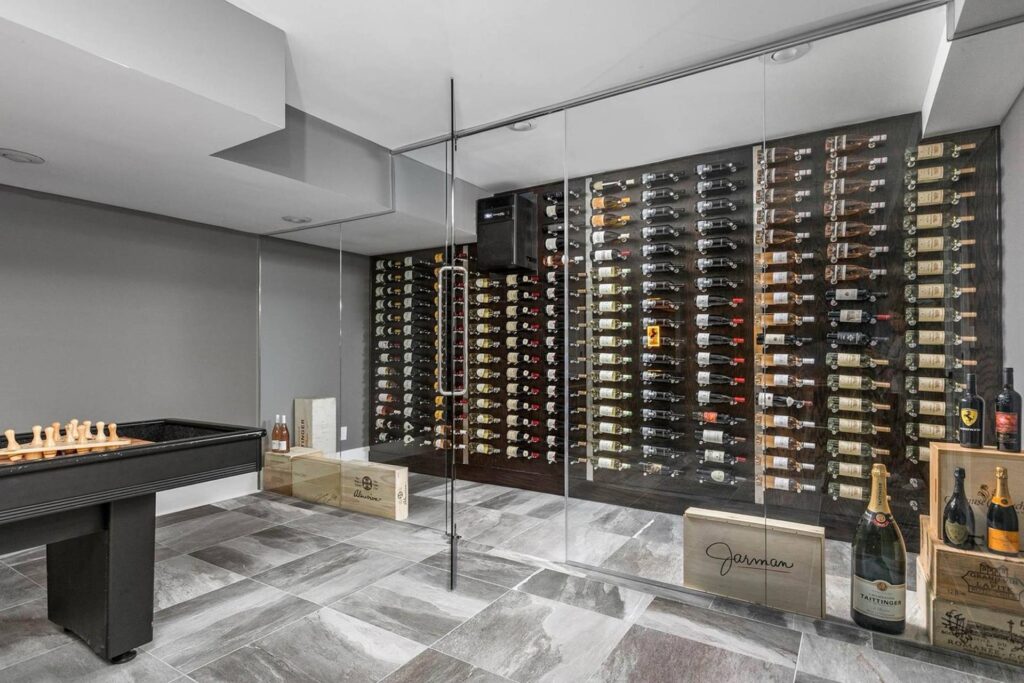
When planning a wine cellar, many homeowners assume that ducted or split cooling systems are always the premium option. While those systems offer impressive performance for large or luxury cellars, they’re not the best solution for every project.
In fact, a self-contained wine cooling unit is often the smarter, more cost-effective choice for many residential wine cellars. They’re easier to install, require less construction, and can provide years of reliable temperature and humidity control when matched with the right cellar.
This guide explains when a self-contained unit is actually the better choice, its advantages, potential limitations, and how to know if it’s right for your wine storage project.
A self-contained wine cooling unit houses all of its major components—including the compressor, evaporator, condenser, and fans—inside a single cabinet.
Unlike split or ducted systems, there are:
The unit is mounted through a wall, ceiling, or in a dedicated enclosure, depending on the model, making installation significantly simpler.
Self-contained units draw warm air from the wine cellar, cool it through the refrigeration system, and return conditioned air back into the cellar.
At the same time, they expel heat into a nearby room or a properly ventilated space.
Because every refrigeration system removes heat from one area and transfers it to another, adequate ventilation on the exhaust side is essential for efficient operation.
Self-contained systems are ideal for:
Many models easily handle wine cellars ranging from a few hundred to over 1,000 cubic feet, depending on insulation, glass, and heat load.
If your cellar isn’t exceptionally large, you may not need the added complexity of a split or ducted system.
One of the biggest advantages is installation simplicity.
Since all refrigeration components are housed in one unit, installation generally involves:
Compared to split systems, there’s no need for refrigerant piping, condenser placement, or specialized HVAC work.
This can significantly reduce installation time and overall project costs.
Many existing homes simply don’t have space for additional ducting.
Examples include:
Running new ducts through finished walls or ceilings can be expensive—or impossible.
A self-contained system avoids this challenge while still providing reliable climate control.
Many homeowners transform an unused area into a wine cellar.
Popular conversions include:
Because self-contained units require minimal structural modifications, they fit well into remodeling projects where preserving existing finishes is a priority.
Luxury ducted systems often require coordination between:
Self-contained systems streamline the installation process, allowing many projects to be completed much more quickly.
If you’re eager to begin storing your wine collection, a simpler installation can save valuable time.
Routine maintenance is straightforward.
Most homeowners only need to:
Since all components are housed in one accessible unit, servicing is generally more convenient than systems with remote condensers.
Lower Upfront Cost
Both equipment and installation costs are typically lower than comparable split or ducted systems.
For many homeowners, this makes custom wine storage more affordable.
Reliable Temperature Control
Quality self-contained units maintain:
When properly sized, they provide excellent storage conditions for long-term wine aging.
Compact Design
Many models fit neatly into:
This flexibility makes them suitable for a wide range of home layouts.
Proven Technology
Manufacturers have refined self-contained systems for decades.
Leading brands continue to improve:
Modern units are more reliable and quieter than earlier generations.
Although they work exceptionally well in many situations, self-contained systems aren’t ideal for every wine cellar.
You may want to consider a split or ducted system if:
Large wine rooms often require:
Ducted systems typically perform better in these applications.
Because the compressor is housed within the unit, some operating noise is unavoidable.
While today’s premium self-contained models are much quieter than older versions, homeowners seeking near-silent operation often choose split or ducted systems with remote mechanical equipment.
Glass walls and doors significantly increase heat gain.
Luxury glass wine rooms frequently require specialized cooling calculations and may benefit from higher-capacity ducted or split systems designed to manage increased cooling loads.
The most common mistake isn’t choosing a self-contained unit—it’s choosing the wrong size.
Cooling requirements depend on factors such as:
Professional heat-load calculations help ensure the unit is properly matched to your cellar, improving performance and efficiency.
Self-contained wine cooling systems are commonly installed in:
Their versatility makes them one of the most widely used cooling solutions for residential wine storage.
Self-contained wine cooling units are often overlooked in favor of more complex systems, but they’re an excellent choice for many homeowners. They combine reliable climate control, simpler installation, lower upfront costs, and easier maintenance into one compact solution.
If your wine cellar is small to medium in size, has proper insulation, and includes a well-ventilated exhaust area, a self-contained unit may offer everything you need—without the added expense of a split or ducted system.
The key to long-term performance isn’t simply selecting the most expensive cooling system. It’s choosing the right unit for your cellar’s size, design, and heat load.
What is a self-contained wine cooling unit?
A self-contained wine cooling unit houses the compressor, evaporator, condenser, and fans in one cabinet. It cools the wine cellar while exhausting heat into a nearby ventilated space, eliminating the need for separate refrigeration lines or an outdoor condenser.
Are self-contained wine cooling units reliable?
Yes. Modern self-contained units from reputable manufacturers are designed for continuous operation and can provide years of dependable performance when properly sized, installed, and maintained.
Are self-contained units noisy?
They produce more sound than ducted or split systems because the compressor is located inside the unit. However, many premium models feature improved insulation, variable-speed fans, and quieter compressors that make them suitable for most residential settings.
Can I install a self-contained cooling unit myself?
Some experienced homeowners can install certain models, but professional installation is recommended to ensure proper ventilation, electrical connections, sealing, and performance. Improper installation can reduce efficiency and may affect warranty coverage.
What size wine cellar can a self-contained unit cool?
The capacity varies by model. Some units are designed for compact closets, while others can cool cellars exceeding 1,000 cubic feet. The correct size depends on heat-load calculations rather than cubic footage alone.
When should I choose a split or ducted system instead?
A split or ducted system is generally a better option if you have a large wine cellar, extensive glass walls, strict noise requirements, or need remote placement of mechanical equipment. These systems provide greater installation flexibility for high-end or complex projects.